READ
READ
READ
READ
THE BIBLE BELT UNBUCKLED

women in the islamic faith
Story Contributors: Kaitlyn Seiler, Korbin Bauer, Malley Jones, Dillon Ford and Alli Baden
The biggest worry for a five-year-old girl should be what game she is going to play at recess, not whether or not she will face discrimination because of her faith.
For Reem Mansy, this was the reality. Mansy, a Stillwater native, is a follower of the Islamic faith.
Mansy’s first encounter with religious prejudice occurred at a gymnastics center when she was five. Mansy said she was looking forward to trying something new with gymnastics.
“My gymnastics coach would see me walk in with my mom [who wore a hijab] every day, and she would treat me differently,” Mansy said. “She wouldn’t let me go to the bathroom, and she would let all the girls go to the bathroom. And once, I fell off the balance beam and hit my head on the metal, and she laughed at me. That was painful.”
Because of the treatment she received, Mansy felt she had no other option but to quit gymnastics. Her newfound joy for gymnastics was drowned out by a prejudice she had only begun to understand.
“I was loving it, but I just couldn’t take it anymore because of the coach,” Mansy said.
With less than one percent of adults practicing Islam in Oklahoma, Mansy and other Muslim women experience something most Oklahomans would be unfamiliar with: discrimination for practicing a religion other than Christianity.
While discrimination against Islamic women is not limited to Oklahoma, Mansy said there can be a bias toward a Western culture religion in Oklahoma.
“I think the only reason people have a bias is because they don’t know the truth about the religion,” Mansy said.

At 15 years old, Mansy and Cheema had to decide whether they were going to follow Islamic practices and wear a hijab or continue to practice their faith without covering.
Mansy said her decision to wear a hijab was one she did not take lightly.
“That was probably the most stressful time of my whole life,” Mansy said. “I wanted to start wearing [the hijab] because I thought it was beautiful, but I was really afraid of starting to wear it because obviously people aren’t going to be nice to you, or people are going to start judging you. They are just going to assume that your intention is just violence.”
Abo-Basha said he believes one of the main reasons women face more discrimination than Muslim men is because they look physically different wearing a hijab.
“If you talk to me and didn’t know my name was Mohamed, and I didn’t have a beard, you probably wouldn’t know I was Muslim,” Abo-Basha said. “I do not look Muslim so I do not [face much discrimination].”
Cheema said she is used to receiving harsh stares and scowling faces, even casually walking around town.
“I think it is pretty typical, especially for a person that covers their head, so I am very visible as a Muslim woman,” Cheema said. “I think the best thing to do is to just smile at them because they wouldn’t expect that.”
The stares and comments Cheema faces do not bother her, she said. Rather, it is a way she feels closer to God.
“I also feel like it is part of the struggle and part of the reason that confirms and makes me feel like I am doing it for God, and I am not doing it for anyone else,” Cheema said. “I am not doing it for a worldly thing.”
The hardship of being labeled as an outcast has inspired Mansy to embrace her differences and allowed her to fully accept her identity as a Muslim woman.
Mansy’s confidence in her faith has allowed her to pursue friendships where they value her because she is different.
Aside from gaining confidence to create new friendships, Mansy has also stepped outside of her comfort zone to pursue leadership roles. Mansy is a member of the President’s Leadership Council at Oklahoma State.
Despite the stereotype that the Islamic religion does not promote equality between men and women, Mansy said the faith’s views accept women’s equality.
“I definitely think Islam encourages women to go out and seek leadership positions,” Mansy said. “During the time of the prophet [Muhammed], his wives actually helped him and were leaders with him. I don’t know why people think women shouldn’t [pursue leadership positions].”
Mann Mansy, Reem Mansy’s brother, said he is proud of his younger sister for being active in trying to redefine how others see Muslim women.
“Islam promotes equality and is very against the idea that women are of a lesser status than men,” Mansy said. “Islam encourages both men and women to seek out an education and become participating mebers of society.”
Reem Mansy knows that discrimination will continue to exist not only in Oklahoma, but across the nation. Now more than ever, she is determined to change Islamic perceptions of those around her.
“I do feel some responsibility,” Reem Mansy said. “Most people have a negative view of Islam, and like Ghandi said, ‘If you want to see change go out a do it yourself,’ and that is what I want to do.”
Despite the bias Mansy feels, Mansy said she wants Oklahomans to understand that Islam is not a religion to be feared.
“I want to show people that Muslims, we’re out here, we’re peaceful, we don’t mean anything bad,” Mansy said. “We are just like you. We are human, too.”
Hiba Cheema is another young Muslim woman who is passionate about eliminating the stereotype that affects outsiders’ perspectives.
Cheema said she believes Muslim discrimination stems from the way media portrays the religion. She said the best way to find truth about Islam is to gather knowledge on the religion from those who practice the religion.
“When information is given to you, and people are willing to seek it out, then you learn more about it and you are able to understand it and reflect and interact with those type of people,” Cheema said.
Even through the struggle of trying to educate her peers, Cheema said she feels called to spread knowledge on Islam.
Cheema said she is aware that most people will likely ignore her. However, she doesn’t let that deter her from talking about her faith with others.
Mohamed Abo-Basha, president of the Muslim Student Association, said it can be hard to change peoples’ minds, especially those in Oklahoma.
“I don’t think you are ever going to be able to educate people unless they want to be educated,” Abo-Basha said. “And to be frank, a lot of Oklahomans don’t want to be educated. I can’t fix that, and nobody can fix that.”
While educating individuals does have its benefits, Mansy said she knows there will always be people who will treat her differently.

The Islamic Society in Stillwater. A place where both Muslim men and women worship and pray. Photo by Dillon Ford
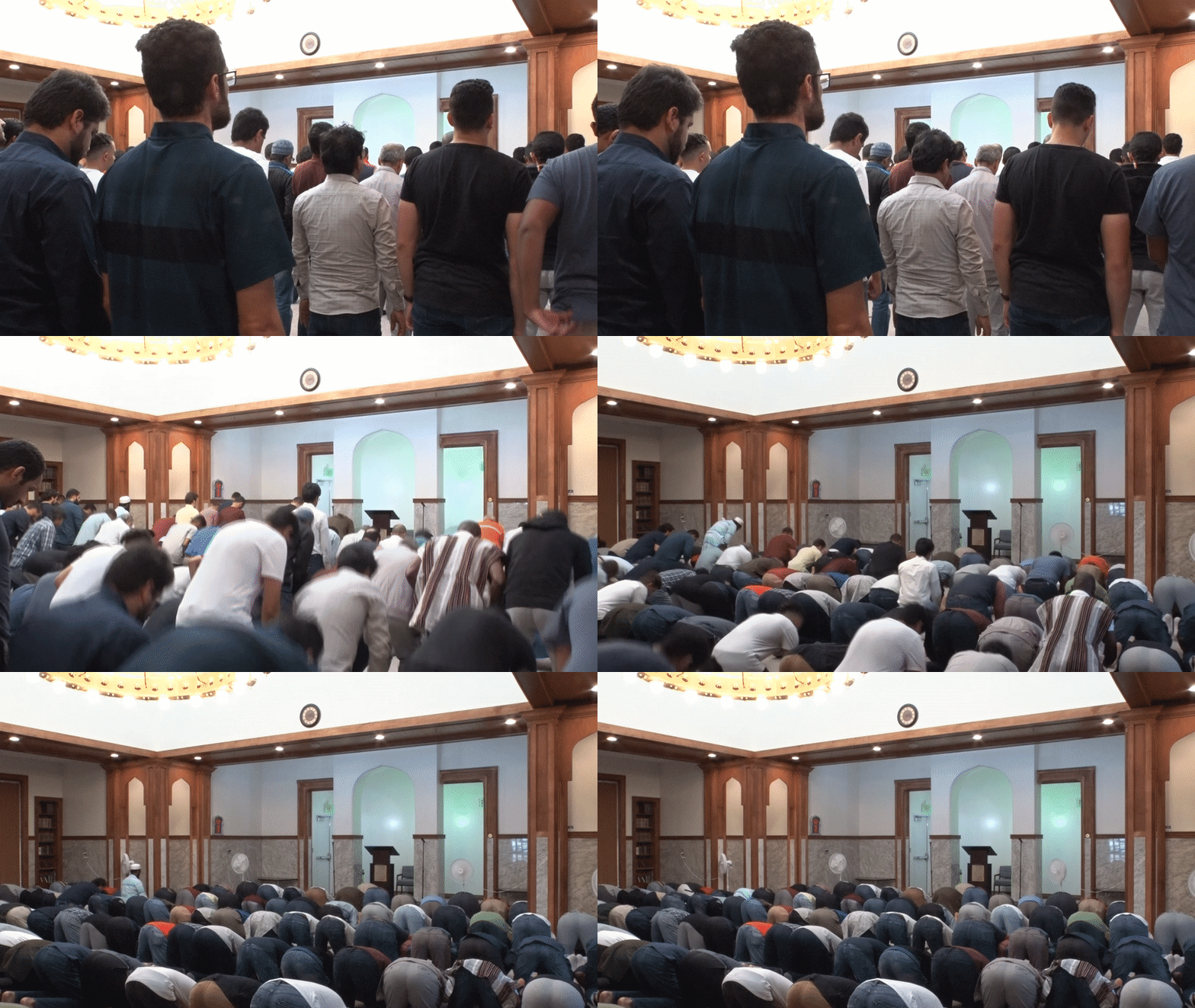
Muslim men worshipping at the Mosque during Friday prayer. Men and women worship in separate rooms and the women are not allowed to be photographed while worshipping. Gif by Dillon Ford

A lighting fixture in the Mosque in Stillwater. A reminder to followers of Islam that they are following God's orders not the world. Photo by Korbin Bauer

Posters in the Mosque that explain the roles women can play in politics and in leadership as well as values that are held highly in marriage. Photo by Alli Baden
